

Room With A View / TIME
The Clockmakers of London: Unravel the Wonders of Time
‘Time is the most valuable thing a man can spend.‘
The phrase belongs to Theophrastus, successor to Aristotle, who understood, long before the escapement or the balance spring, that time is not defined by instruments, but revealed in how it is spent.
My father would have agreed, though he arrived there differently. A Hellenophile and linguist, he preferred to reverse Parkinson’s law entirely: time expands for purpose. He wore a wristwatch, always, a simple circular dial on a brown leather strap, even high above the sea in a remote Greek hamlet where the day could be read in the arc of the sun. It was not necessity, but discipline. A residue, perhaps, of his years as a Royal Marine, where timekeeping is not philosophical but operational.
And yet, as he listened to Bach and watched the light move across five centuries of stone, an olive pressing settlement shaped under the long shadow of the Venetian empire, time did seem to expand. Not measured, but experienced.
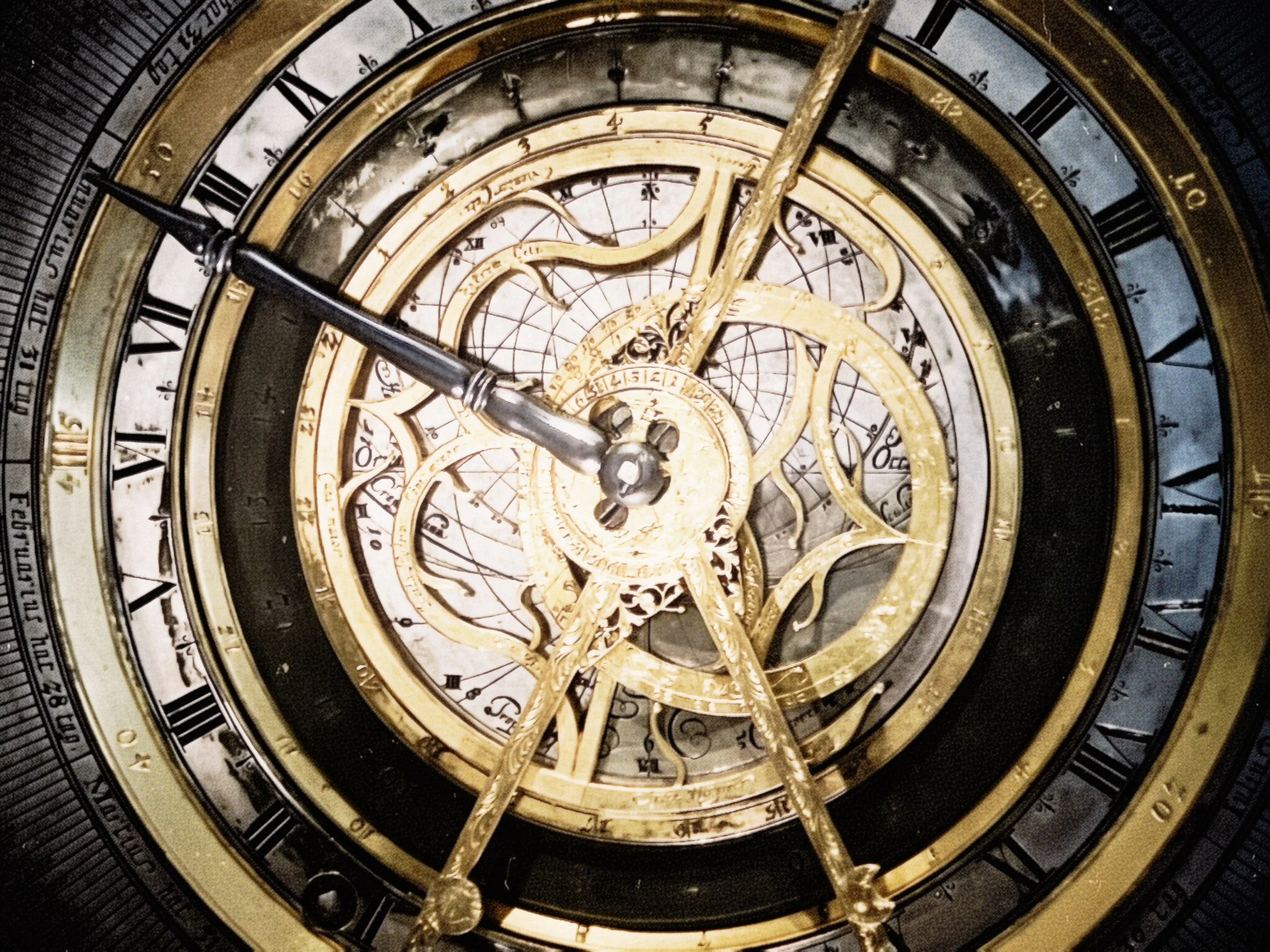
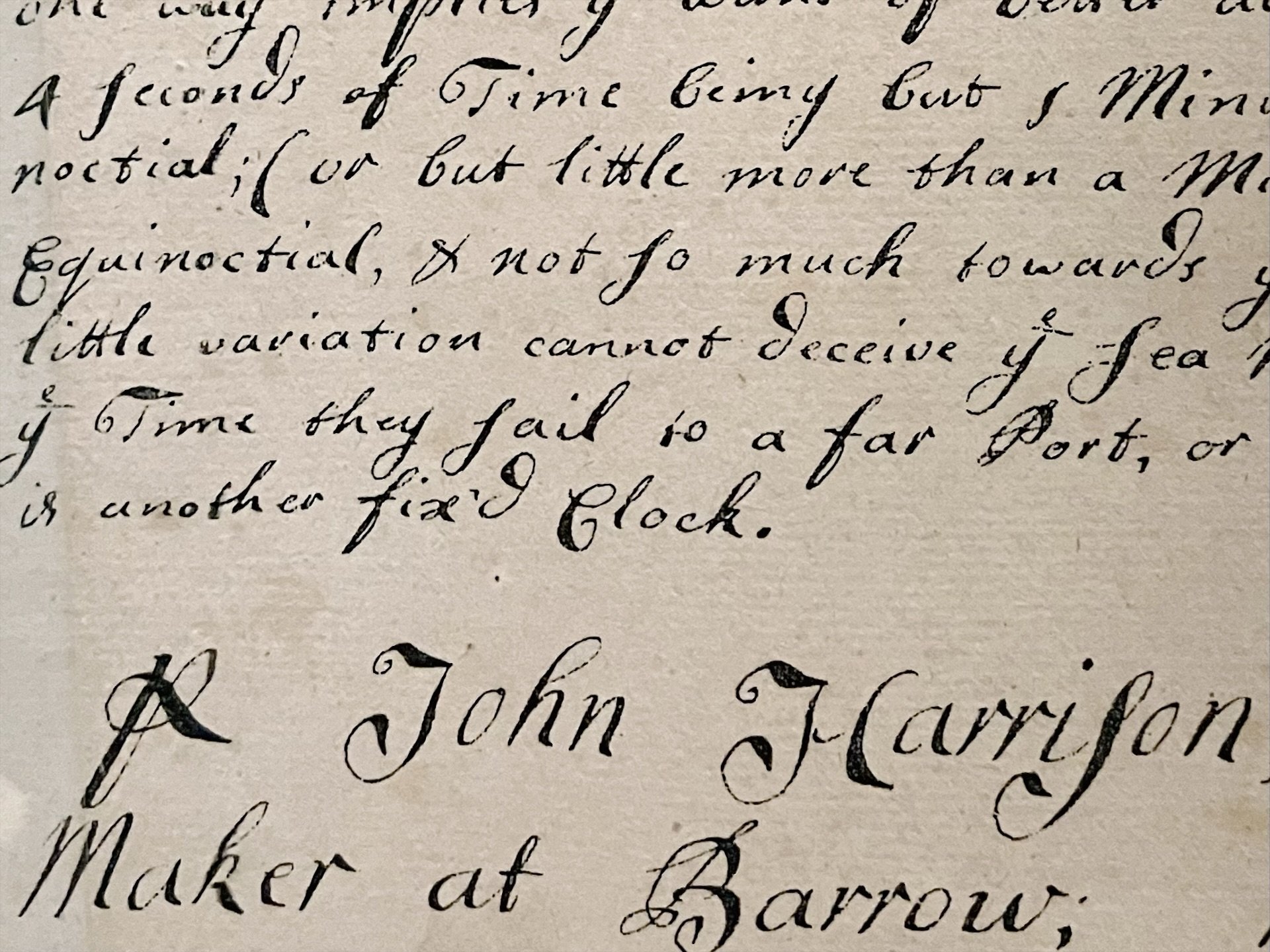
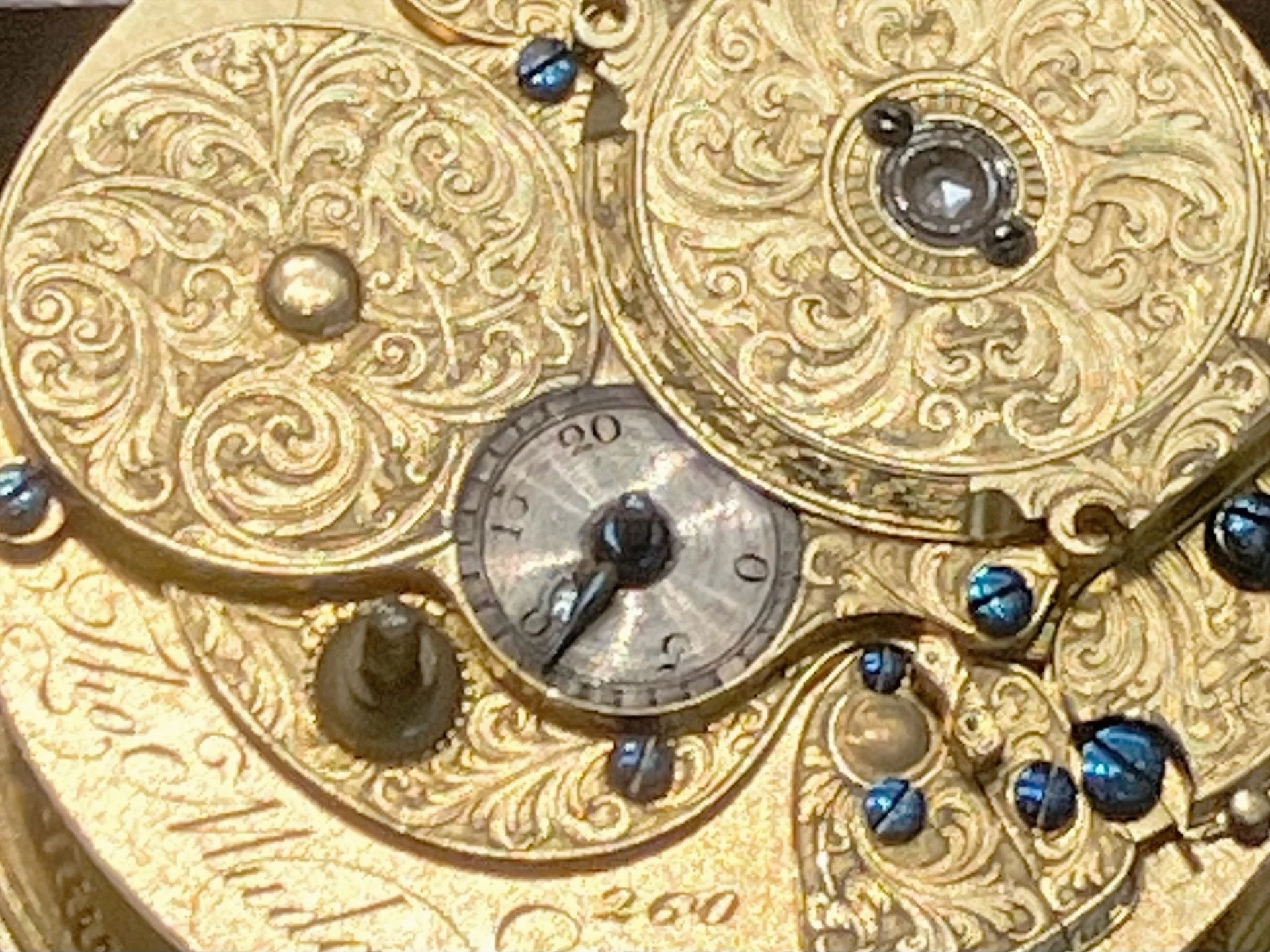
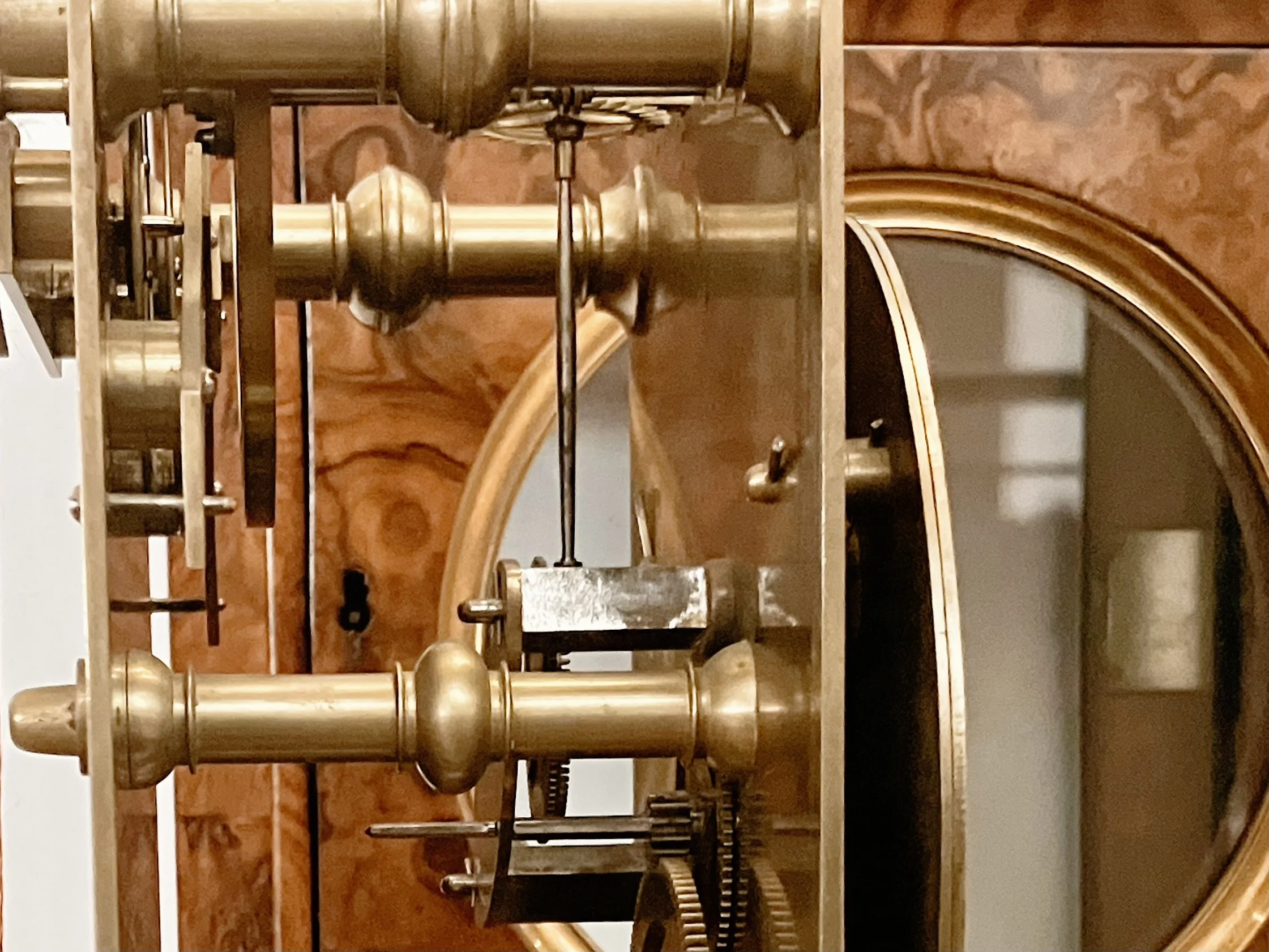

For more than five centuries, the great astronomical clock of the St Mark’s Clocktower has marked civic time over Venice, its rotating discs and celestial indications translating the movement of the heavens into human rhythm. It is both instrument and theatre: a reminder that time, once external and cosmic, would gradually be brought inward, miniaturised, regulated, and worn.
Inside the Science Museum, that long arc of ingenuity resolves into brass, enamel, and steel.
The Clockmakers’ Museum, the oldest collection of clocks and watches in the world, is the work of the Worshipful Company of Clockmakers, established in 1631. What began as guild oversight became, over centuries, a record of obsession: humanity’s determination to regulate, refine, and ultimately command time.
Before this, we borrowed time from nature.
Fire clocks measured duration through calibrated burn. Water clocks, or clepsydrae, marked the steady flow of gravity. Sundials, using a gnomon, traced the Earth’s rotation in shadow. These were systems of alignment, not control. Time was followed, not kept.
The breakthrough was mechanical.
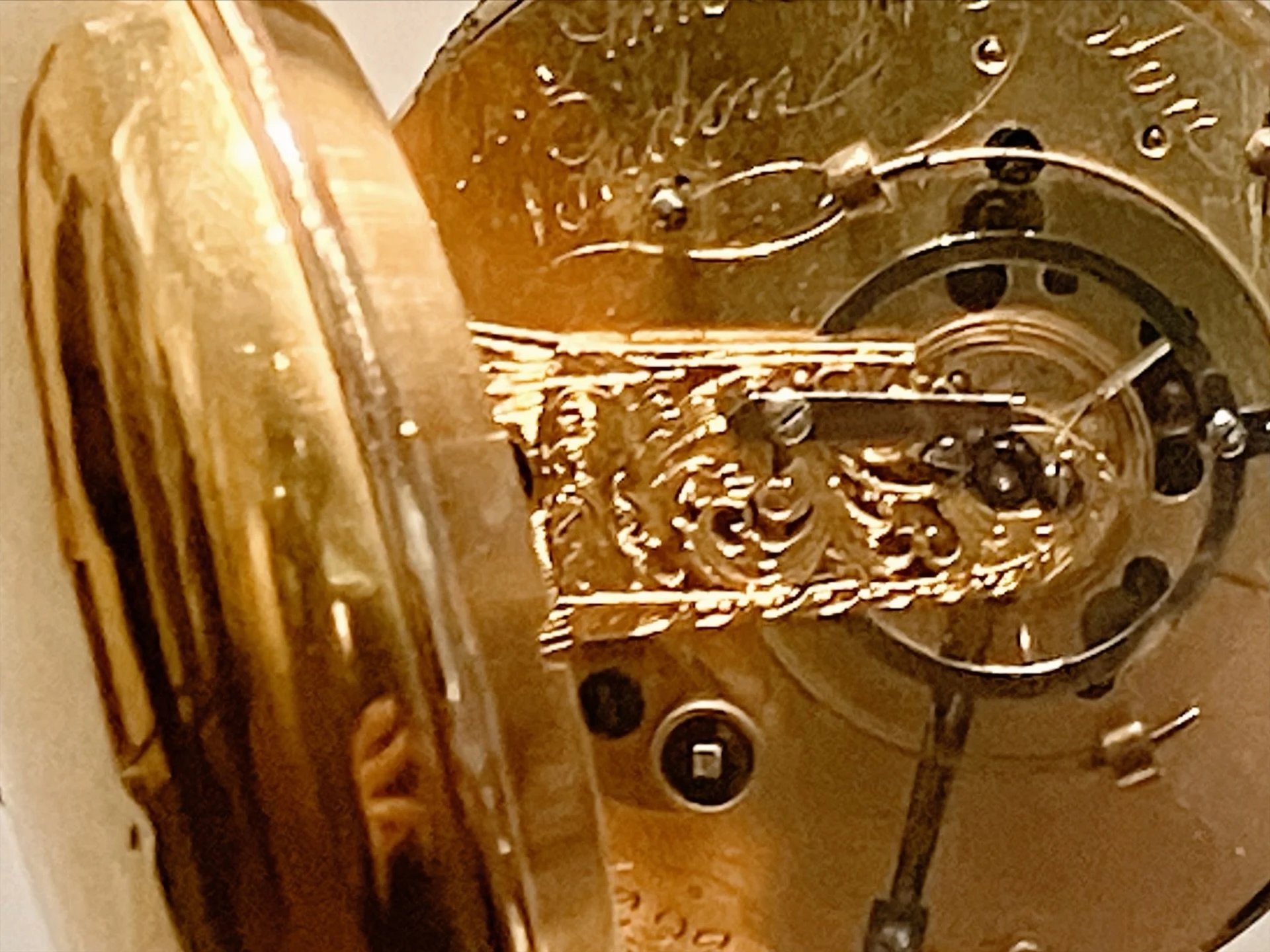
The escapement, regulating the release of stored energy into discrete, countable intervals, transformed time into something divisible, standardised, and portable. The balance wheel and hairspring, oscillating at a fixed frequency, allowed portable timekeeping to approach true precision, turning the watch from ornament into instrument.
The consequences were global.
At sea, the problem of longitude, the inability to determine east–west position, limited navigation for centuries. It was resolved not by astronomy alone, but by engineering: the work of John Harrison, whose marine chronometers maintained precise time despite temperature variation, friction, and the motion of the ship. By comparing local solar time to a fixed reference, longitude could finally be calculated.
Empire, trade, and exploration accelerated with it.
In the gallery, this history is told not in grand gestures, but in mechanisms.
An astronomical automaton monstrance clock performs the cosmos in miniature, its dial alive with celestial indication. Time is not only measured here, but displayed, narrated through motion. Nearby, rows of pocket watches trace the evolution of portability and precision, from early verge escapements to refined later calibres.
Names appear like signatures: Breguet, Berthoud, Urban Jürgensen, Vacheron Constantin. Each represents not just craftsmanship, but a philosophy of time, whether as luxury, utility, or intellectual pursuit.
A Breguet souscription watch, with its single hand and reduced dial, approaches abstraction. Time distilled to its essential gesture, a foundational moment in industrial luxury and a precursor to both modern wristwatches and crowdfunded design thinking
And then, something altogether more ambitious.
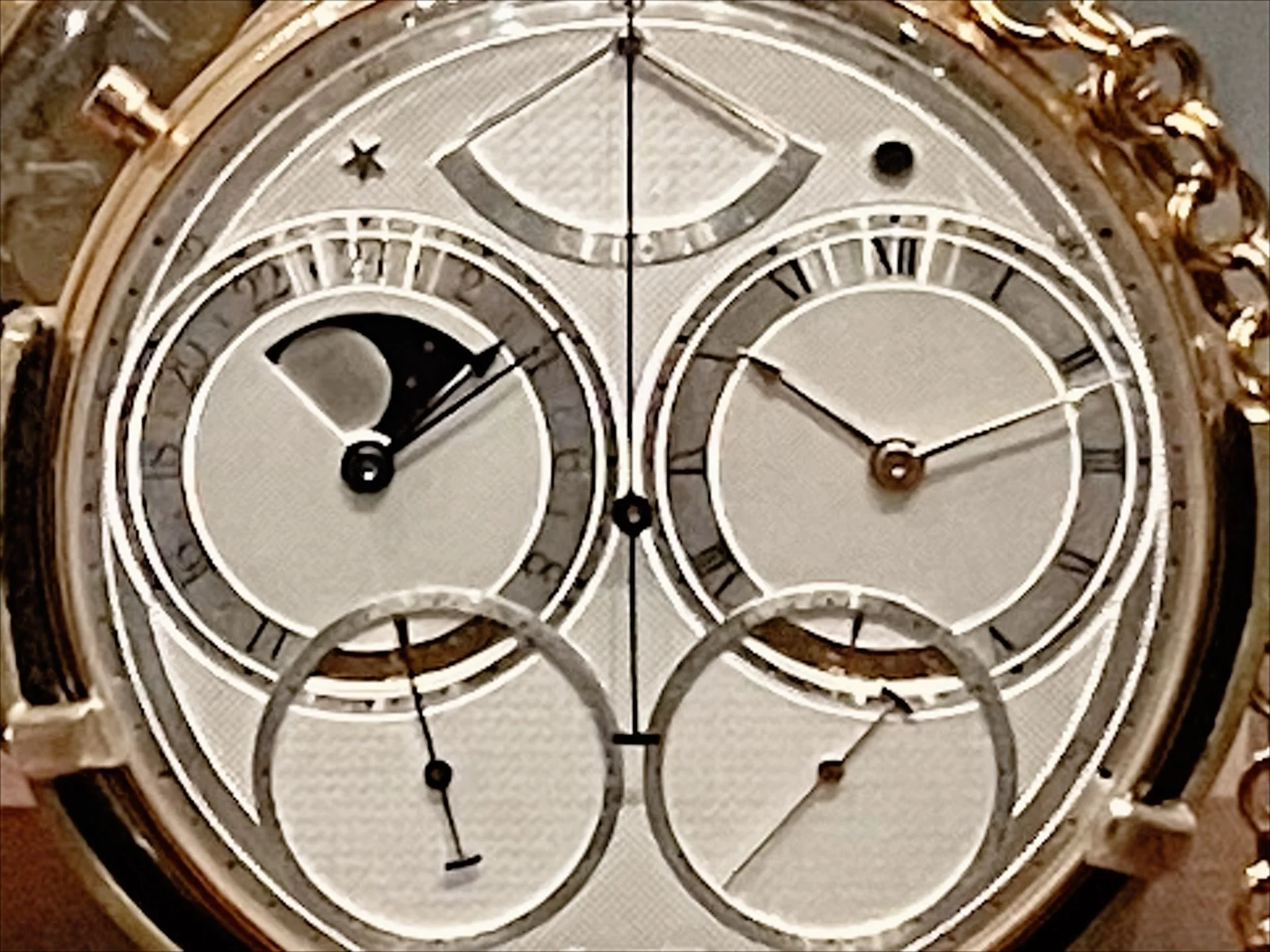
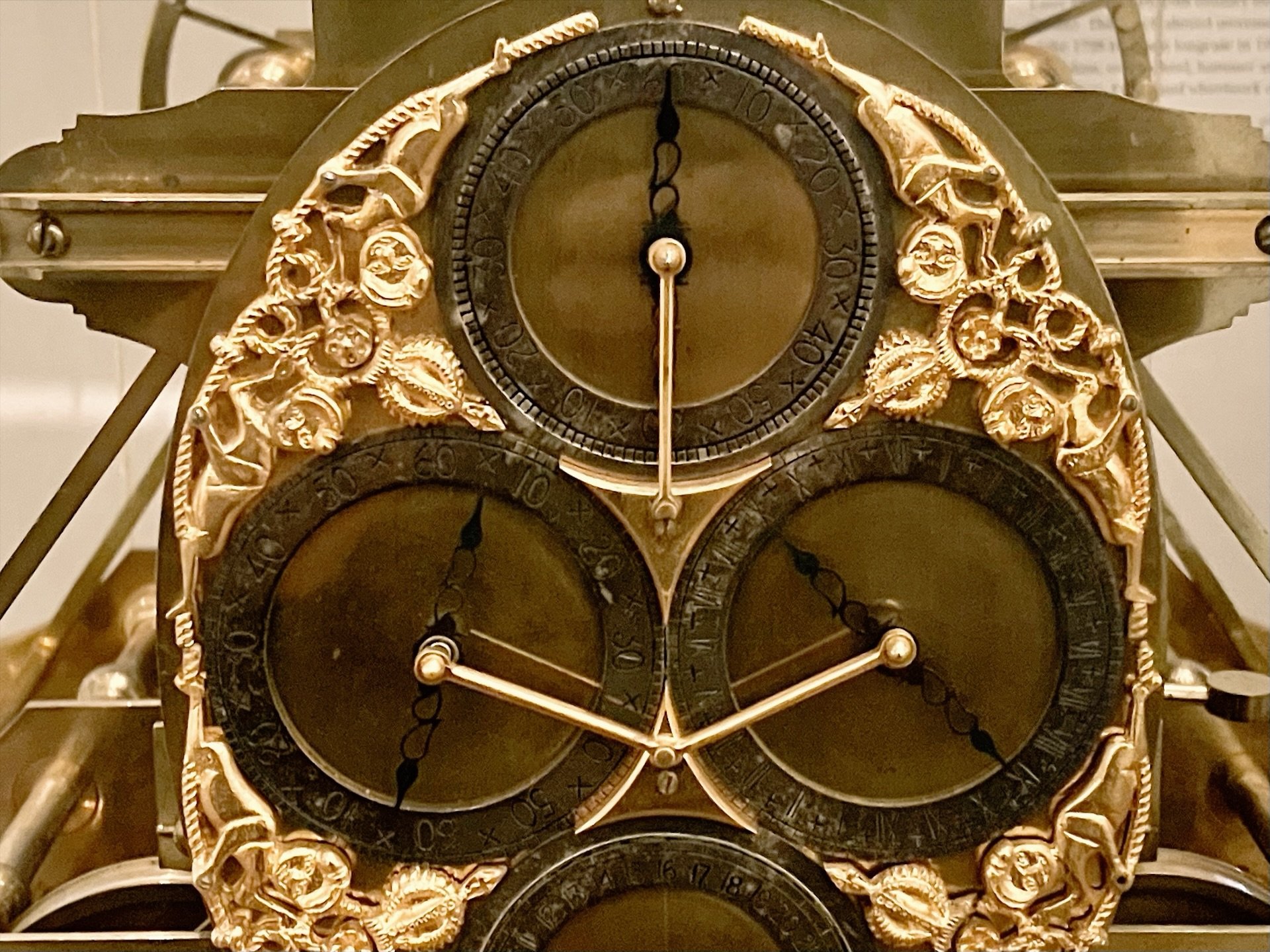
The Space Traveller, created by George Daniels, stands as a culmination of horological thought. It displays mean solar time, sidereal time, and lunar phase, a convergence of terrestrial and astronomical cycles on a single dial. Daniels, with characteristic wit, remarked that one might need such a watch on a ‘package tour to Mars,’ naming it in honour of the Apollo 11 Moon Landing.
Time, once celestial, returns to the cosmos, but now through human invention.
There is a rhythm to all of this. The tick of the escapement, the oscillation of the balance, a mechanical heartbeat. Not so far from poetry, which also depends on measure, cadence, and return. As noticed by the Poetry Foundation, the music of poetry lies in its patterning of time, its ability to create expectation, delay, and resolution.
And yet, can it be reduced so neatly? Poetry resists full translation. Its meaning shifts with voice, with context, with the ear of the listener.
Language itself, our primary instrument of understanding, is also its greatest limitation, a system that both reveals and obscures. Time may be no different.
We divide it, regulate it, encode it into mechanisms of extraordinary precision. And still, it refuses to resolve entirely. Like poetry, it is experienced unevenly, expanding, contracting, eluding measure.
Some of the world’s greatest poets have written time into meaning, from William Shakespeare, who warned,
I wasted time, and now doth time waste me,’ (Richard II)
to Rabindranath Tagore, who offered something altogether more luminous,
Let your life lightly dance on the edges of Time like dew on the tip of a leaf.’
In the Clockmakers’ Museum, time is revealed not as constant, but as constructed, something drawn from nature, refined through centuries, and still, ultimately, a mystery.
The instruments grow ever more precise, yet the question remains unchanged: what do we do with the hours we are given?
And what, ultimately, is that purpose? Perhaps only this. Just one more day.
The Clockmakers’ Museum is housed within the Science Museum in London and is free to visit.
Viewfinder: A Journey Through Time
Through the Lens
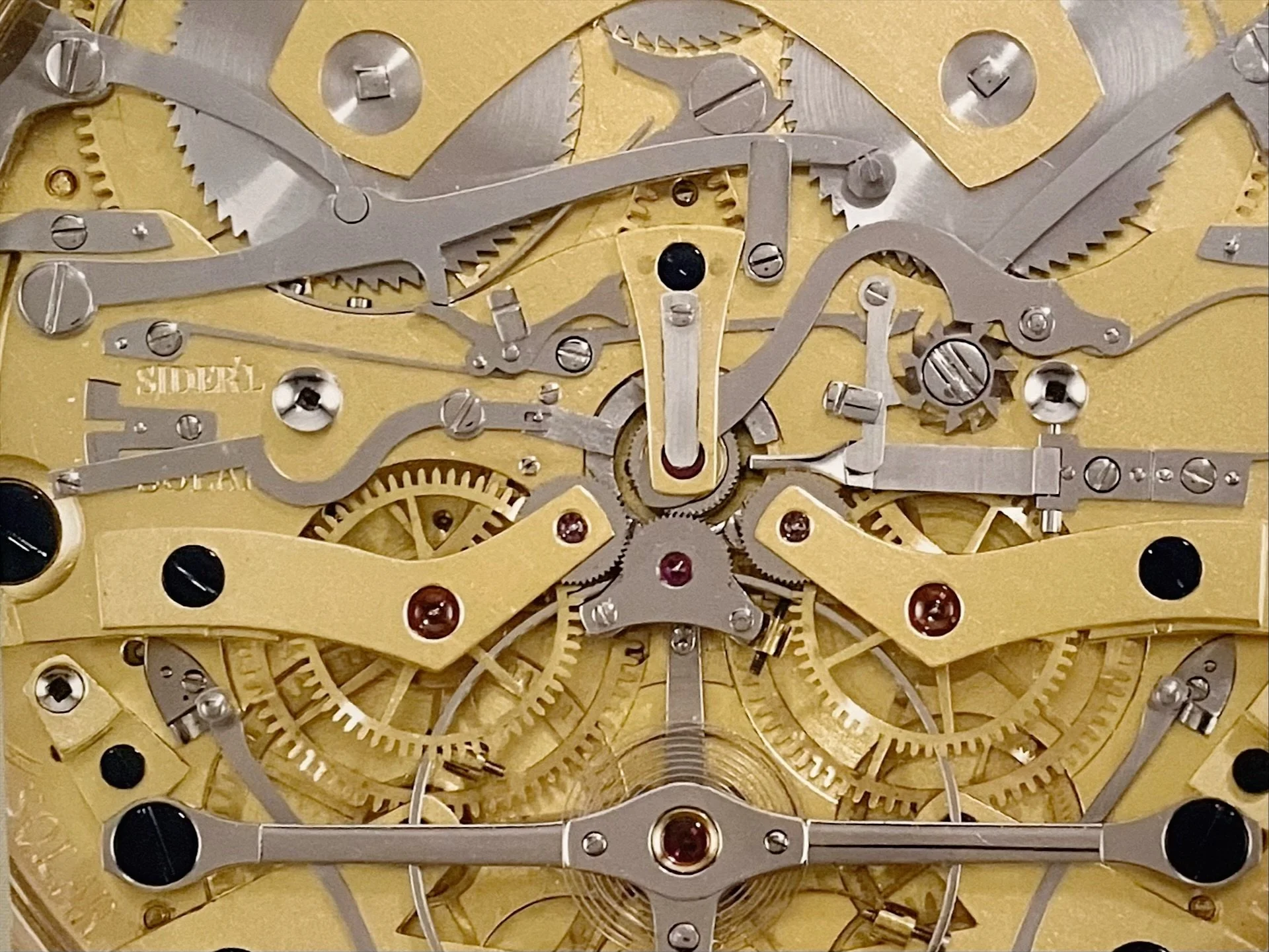
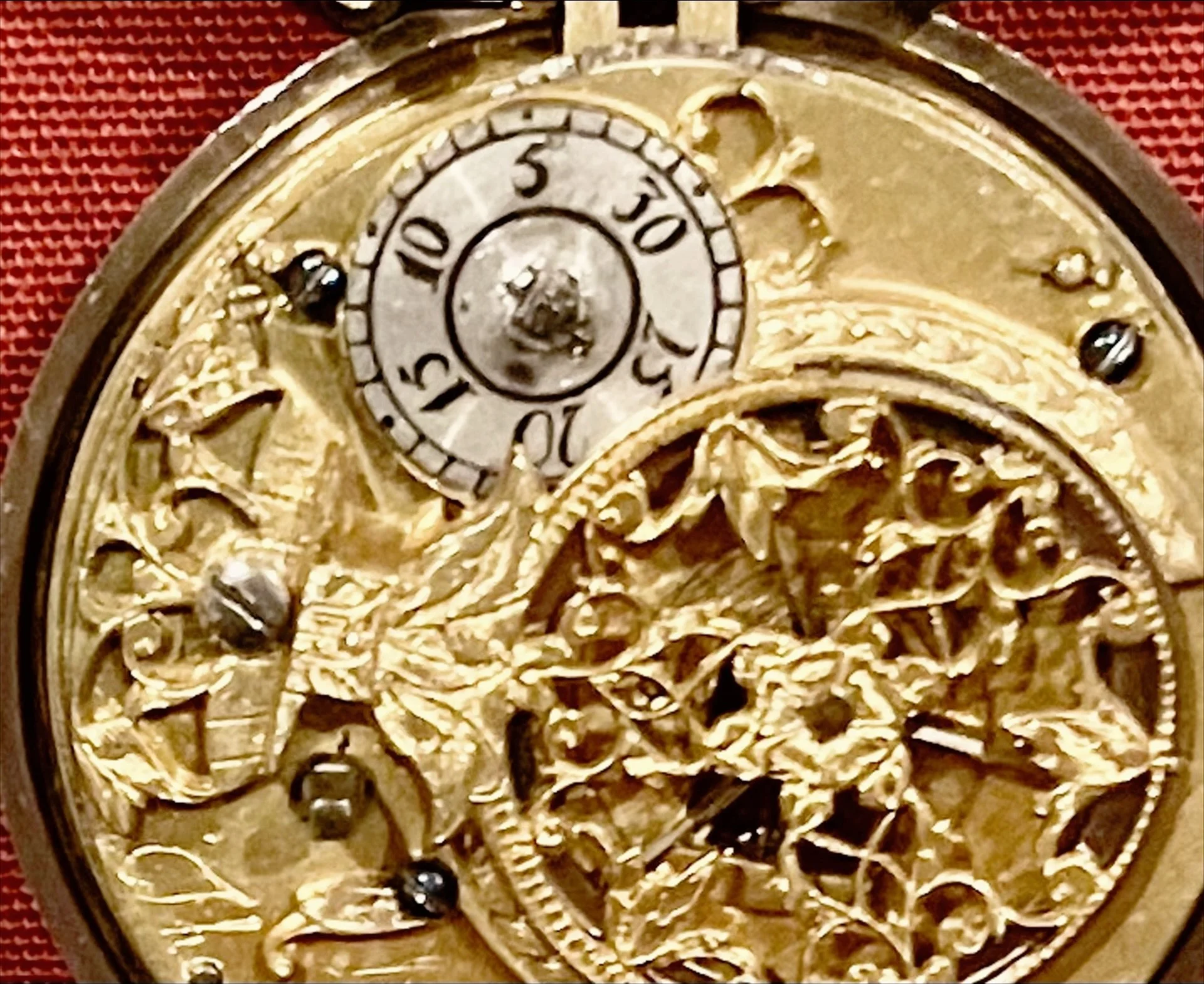
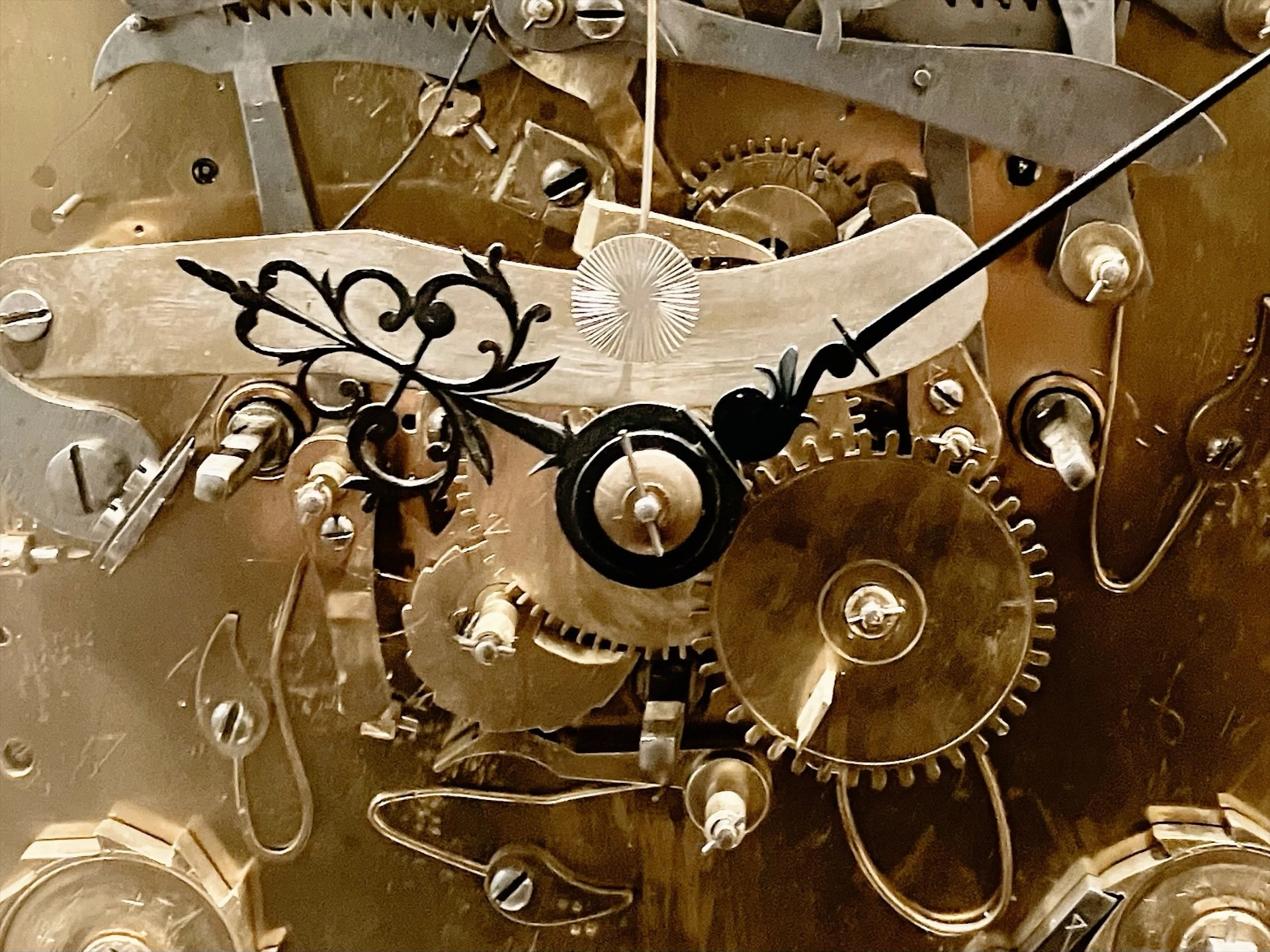
All photographs shot on Leica, by kind permission of the Science Museum, London. Abstract details of dials, escapements, balance wheels, and striking trains captured to document the mechanics, design, and craftsmanship of historic timepieces, a contemporary visual study of horology as both science and art.
Field Notes
This series is a contemporary response to antiquity, a meditation on historic objects and designed systems through photography, drawing, essay, and poetry. Here, I reflect on the language of time and horology, where observation, history, and imagination intersect.
Collectors Handbook
Horology is best read not as ornament but as engineered language. Every component has purpose and history.
Escapement The heart of precision. A verge or anchor escapement releases stored energy in regulated impulses; its geometry dictates accuracy. The difference between a cylinder, lever, or dead‑beat escapement can mean minutes gained or lost per day.
Balance Wheel & Hairspring: These two oscillate like a pendulum in miniature. The hairspring’s elasticity and the balance wheel’s mass set the rate, the ‘beat’ of the watch. In good examples, regulators were adjusted to compensate for temperature and positional variance long before electronics existed.
StrikingTrain Found in clocks and some pocket watches, this is the mechanism that announces time. Its count wheel and hammers must be calibrated to avoid premature strikes, and their tolerances reveal the maker’s skill.
Materials & Metallurgy Blued steel (created by controlled oxidation) protects pivots and screws from corrosion while signalling quality. Gilt brass on cocks and bridges resists tarnish and stabilises delicate parts. Original natural oils, not modern synthetics, were formulated to stay viscous without gumming, crucial for pivots and wheel trains.
Wheel Train Geometry The spacing and sizing of gears matter. A small seconds subdial isn’t decorative, it reflects the gear ratio between the centre wheel and fourth wheel, a design choice with mechanical consequences.
Dial & Numerals Roman numerals do more than signal classicism, they are laid out to balance weight and readability. A regulator dial (separate hours/minutes) was a precision maker’s demonstration piece.
For collectors, these components are not abstract:
A lever escapement in original condition can add measurable value.
Blued screws and unharmed regulation pins suggest careful use and storage.
A clean striking train with crisp hammer action speaks to thoughtful maintenance.
Understanding these details lets one see beyond surface beauty to the logic of the mechanism, design choices that shaped timekeeping itself.
Future Frame: For The GlobalCitizen
Reflecting on the legacy of human ingenuity, and the responsibility we bear for the planet, this section considers how historic objects inform a sustainable future. From the materials that power our clocks to the rhythms of production, every mechanism is a reminder: time is finite, and so is our stewardship of the Earth.
Conservation and stewardship of historic timepieces draw on established horological and heritage institutions. Associations such as the British Horological Institute (BHI) provide research, training and conservation philosophy to preserve mechanisms and provenance for future generations.
The International Museum of Horology and the Watch Library Foundation digitally archive and showcase clocks and watches alongside technical documentation, ensuring that rare escapements, balance wheels and striking trains are understood in context.
Professional bodies such as the International Institute for Conservation of Historic and Artistic Works and the UK’s Institute of Conservation support standards and ethics that protect mechanical objects as cultural heritage.
For the contemporary collector, this means valuing materials, climate‑controlled environments, mechanical integrity and documented provenance as part of sustainable stewardship of horological history.
With special thanks to The Science Museum and The Clockmakers Guild.