

Room With A View / CHANTILLY - ANNENCY - GENOA
The Fun Way Down: London to Genoa in a Cinquecento
We leave London early, before the city has fully decided what it is. Cinnamon buns, still warm, eaten on the move. Coffee in paper cups. The car waiting, small, self-contained, slightly improbable for the journey ahead.
A Fiat 500. A Cinquecento 0.9 TwinAir Blackjack edition, wrapped in the matte black vinyl typically reserved for supercars. Underneath, officially, it is green. Which makes it, technically, the perfect vehicle in which to drive through Paris. Two cylinders. Turbocharged. Around 85 horsepower. Compact, responsive, faintly irreverent, it feels less like a car, more like a point of view. We point it south.
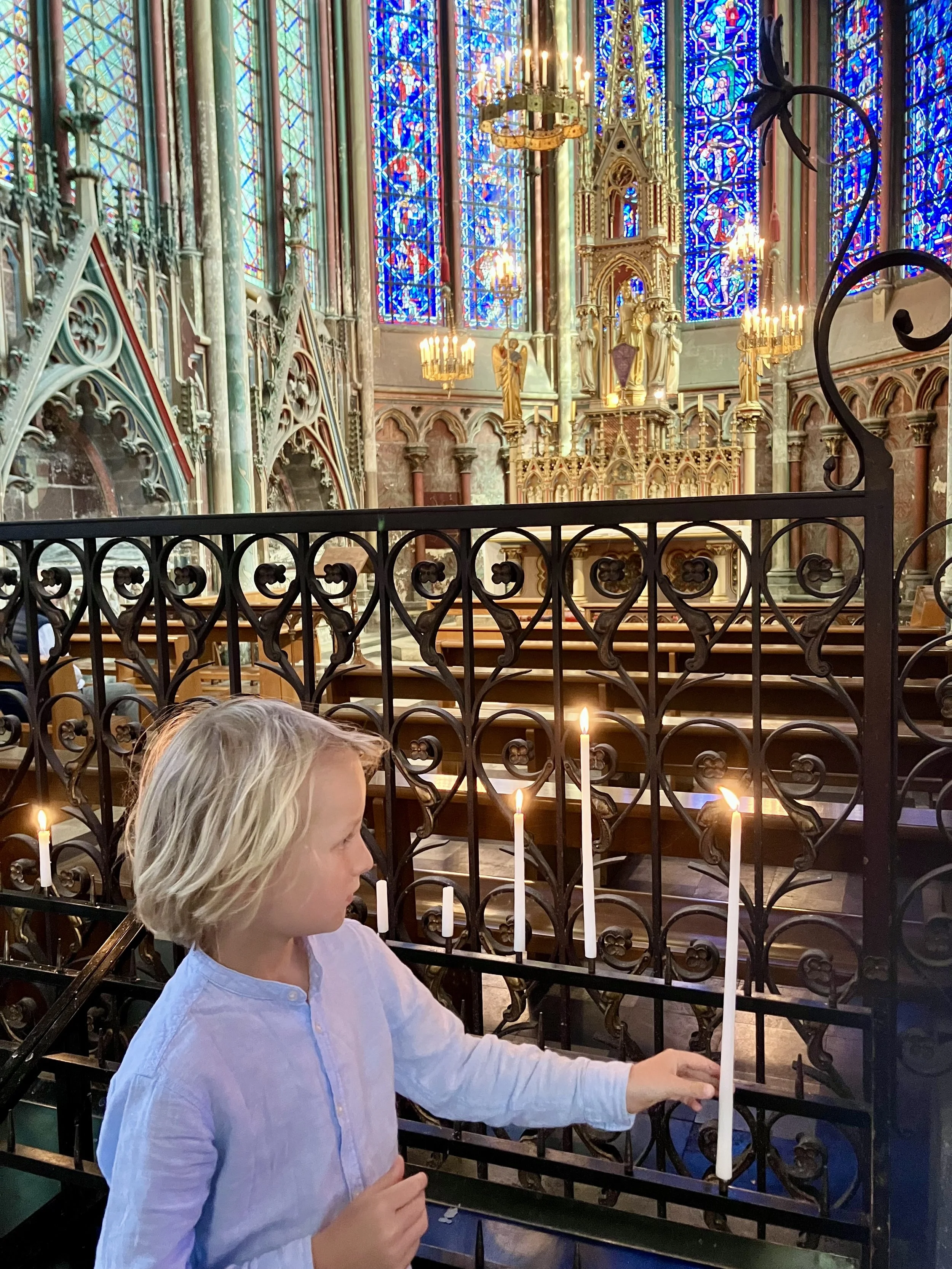
The crossing is quick. England recedes. France arrives in soft greys, fields, sky, distance, until suddenly, Amiens rises. Amiens Cathedral is the largest Gothic cathedral in France, constructed with an ambition that feels almost impossible when you stand beneath it. Inside, the air shifts.
Candles flicker against stone that has held centuries of quiet thought. We light one, for the living, for the lost, for everything in between. Outside, macarons, said to follow a recipe once favoured by Catherine the Great, dissolve almost instantly into almond, sugar and air. Travel sharpens appetite. For sweetness, yes, but also for meaning.
Chantilly: Discipline and Grace
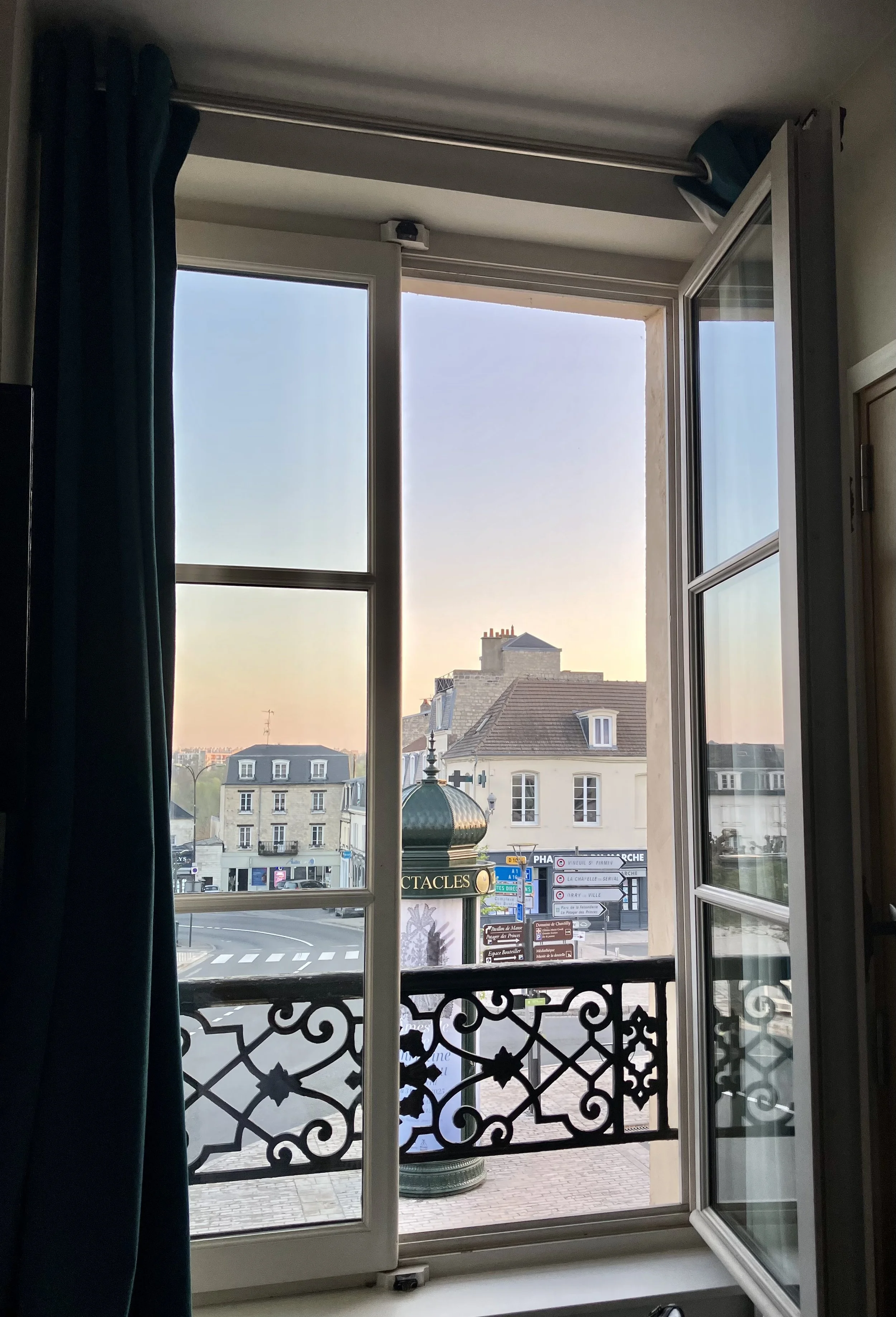
We arrive in Chantilly as the light begins to thin. This is horse country. Not decorative, precise. At Chantilly Racecourse thoroughbreds are trained with a level of detail that borders on the obsessive. Bloodlines traced back generations. Muscle tuned through interval work, short bursts of speed followed by controlled recovery. Heart rate monitored, stride length measured, temperament assessed daily. Speed, here, is not an accident. It is constructed. Nearby, the world famous crème Chantilly is perfected in parallel.
At dawn, mist rolls low across the training grounds. We leave as the sun begins to rise.
Paris: Circles and Steel
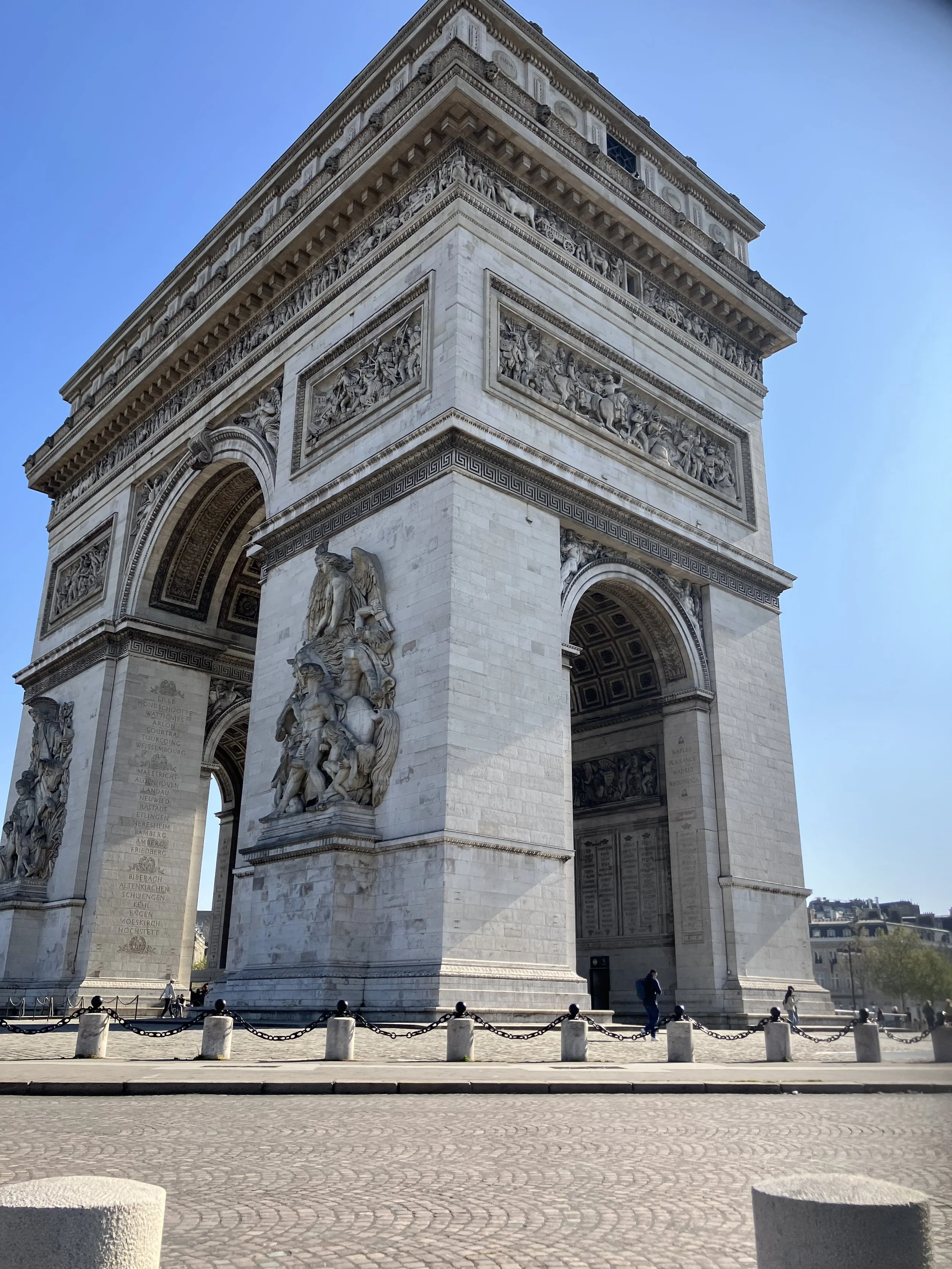
We enter Paris early, before traffic thickens, and join the slow choreography around the Arc de Triomphe, twelve avenues converging in a geometry that is both chaotic and exact.
Then the Eiffel Tower. Engineered for the 1889 Exposition Universelle, it remains a study in structural clarity, 18,038 wrought-iron components, assembled with over two million rivets. Designed to resist wind rather than oppose it, it shifts subtly in heat, expands, contracts, breathes. What was once temporary has become essential.
We circle once, twice. The small engine of the Cinqucento holds its line, light, efficient, quietly determined. Breakfast is taken standing in a petrol station, croissants still warm. Then south.
The Ascent: Learning to See
The road tightens as we approach the Alps. The TwinAir engine changes tone under pressure, a higher note, more insistent. Turbo engaged. Corners approached with intention. There is no excess here. Only calibration. Gradients matter. Timing matters.
I think of Paul Cézanne who wrote,
‘The eye is not enough; one must think as well.’
Here the mountains insist on it. In a small car built for the city, snow gathers at the edges of the road. Light fractures across rock. The landscape reduces to planes, colour, geometry, structure, and driving becomes a form of looking.
Arrival: Genoa, Vertical City
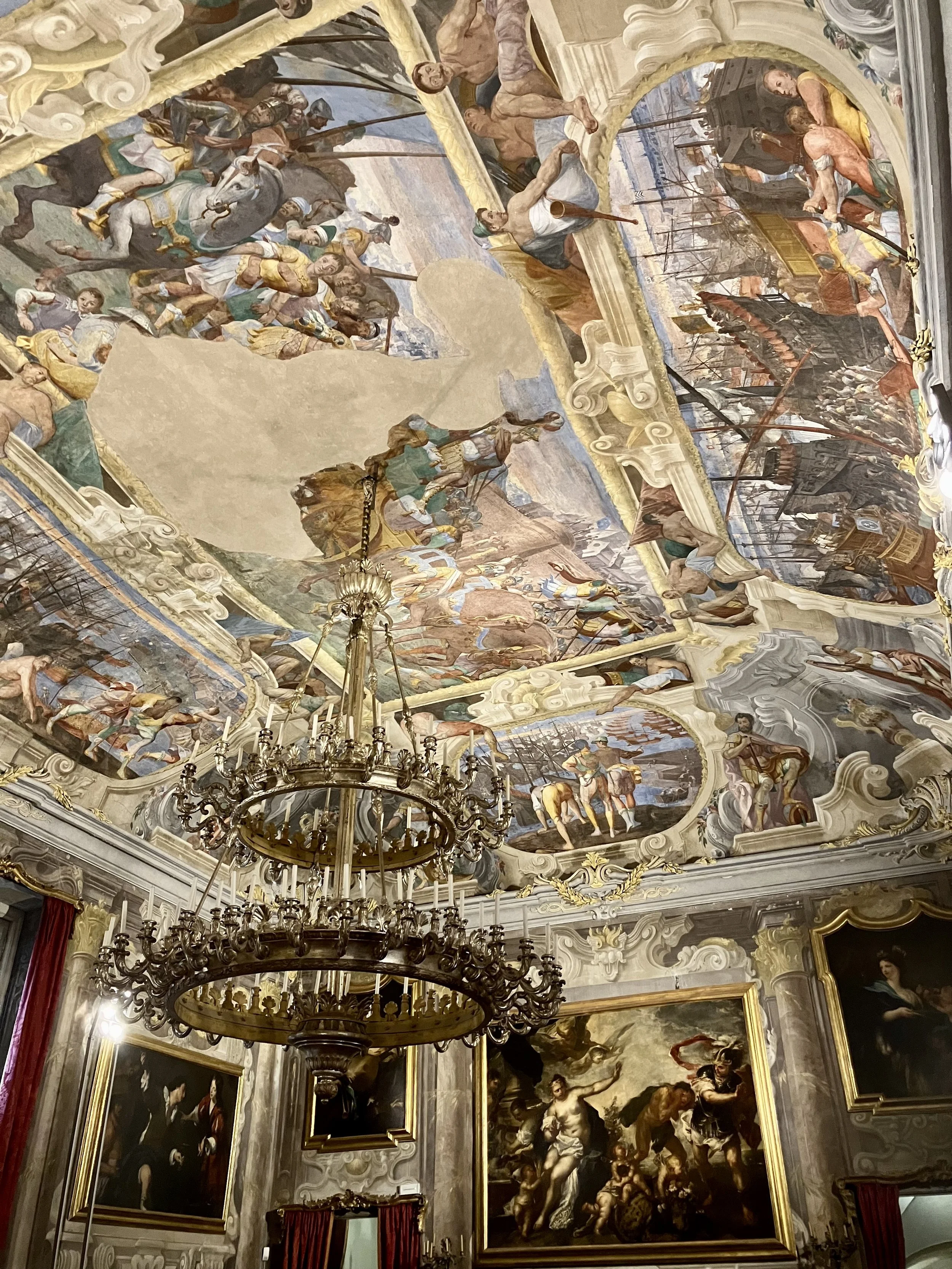
Genoa does not reveal itself easily. It rises in layers, port, palazzo, hillside, a city shaped by trade, power and necessity. Once a maritime republic to rival Venice, its wealth moved through these streets via banking, shipbuilding and empire. And yet, there is friction here.
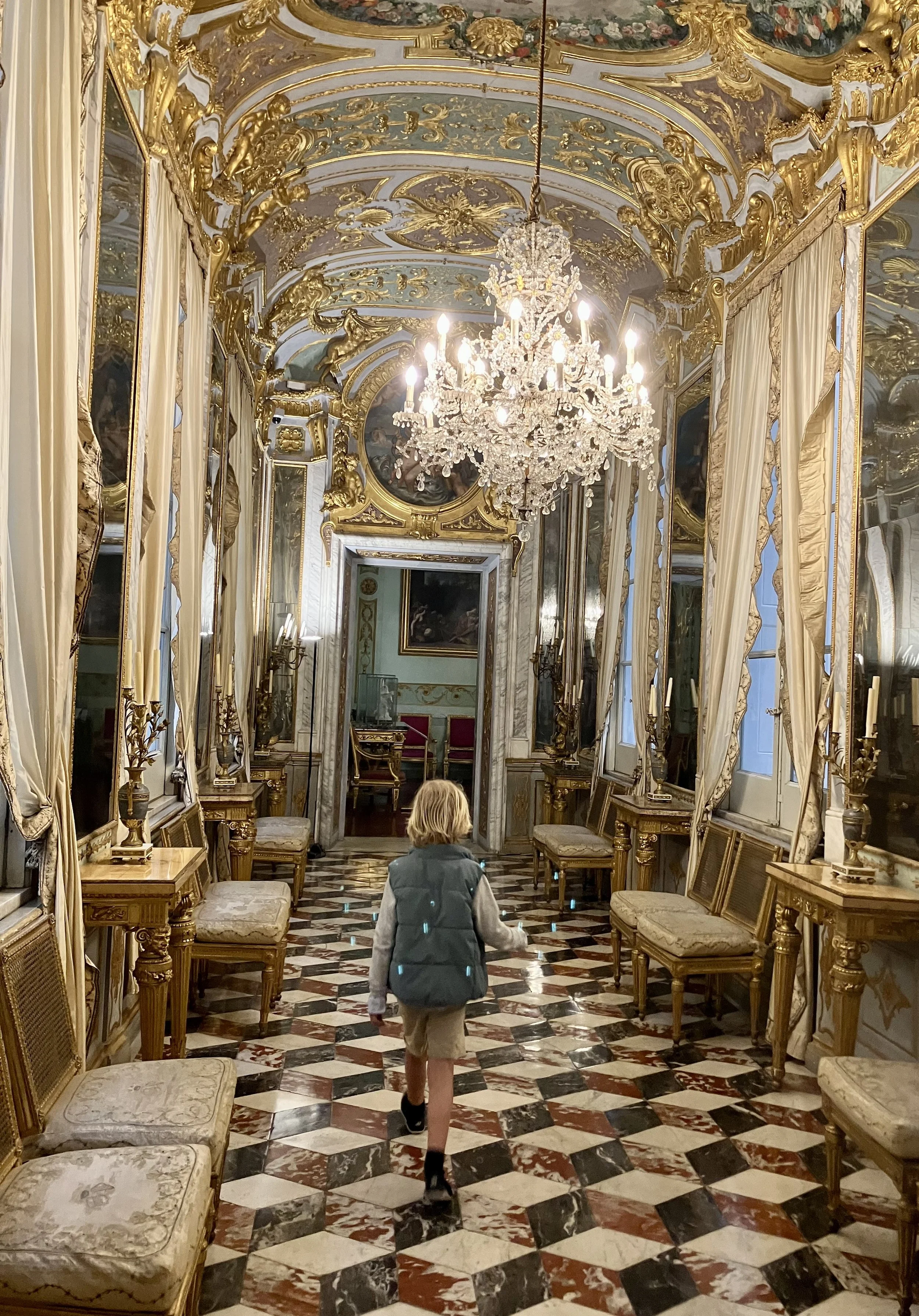
The caruggi are narrow, shadowed even at midday. Laundry strung between buildings. Scooters threading through impossibly tight spaces. On Via Garibaldi, the palaces assert themselves in Baroque façades, symmetry, scale. Wealth, once absolute. And then, a skateboard shop. Music. Movement. This is Genoa.
There is something intoxicating in its contradictions. As Friedrich Nietzsche wrote,
‘I love this city, it is the place where I feel most at home.’
The Room: Hotel Bristol
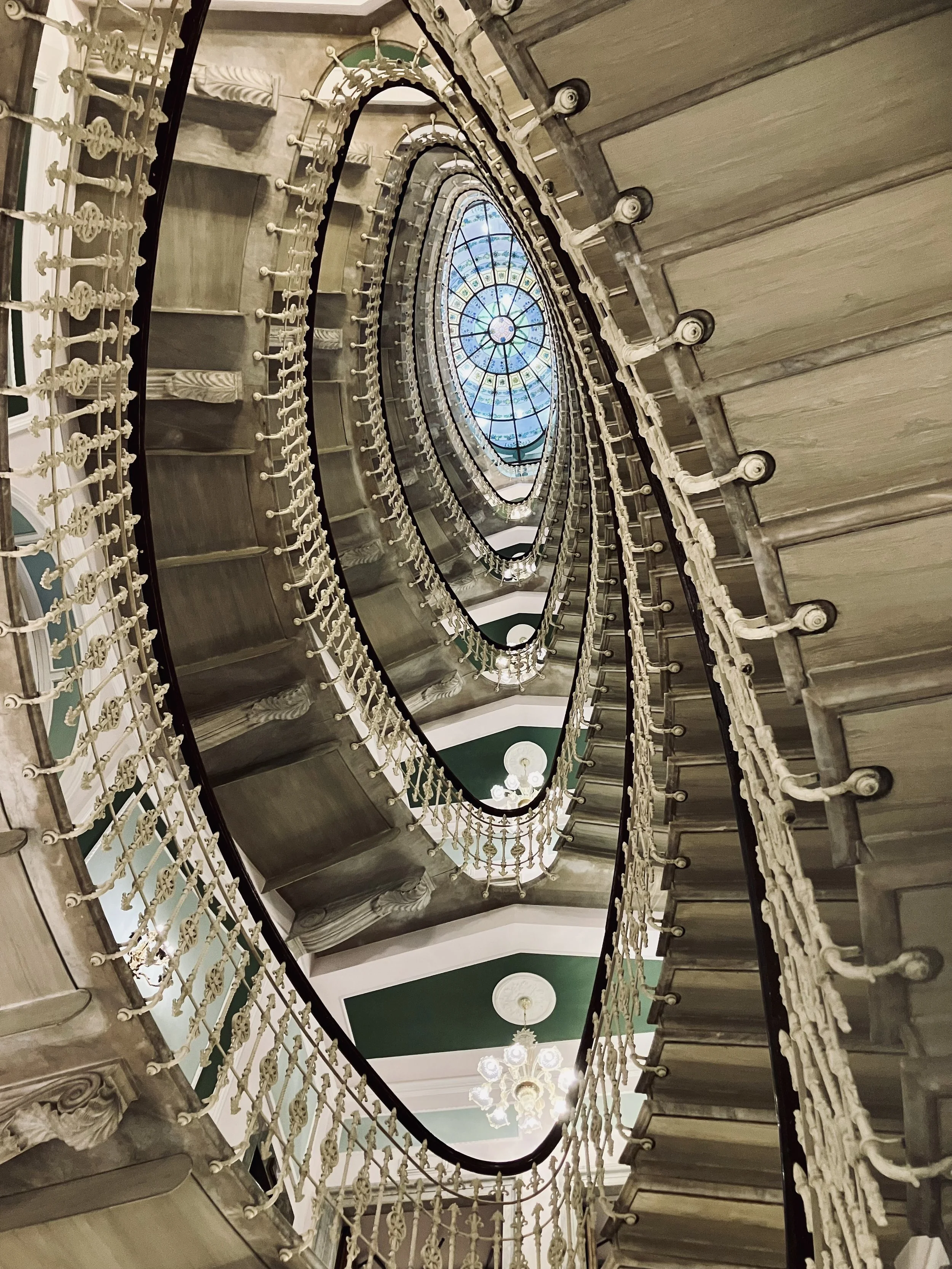
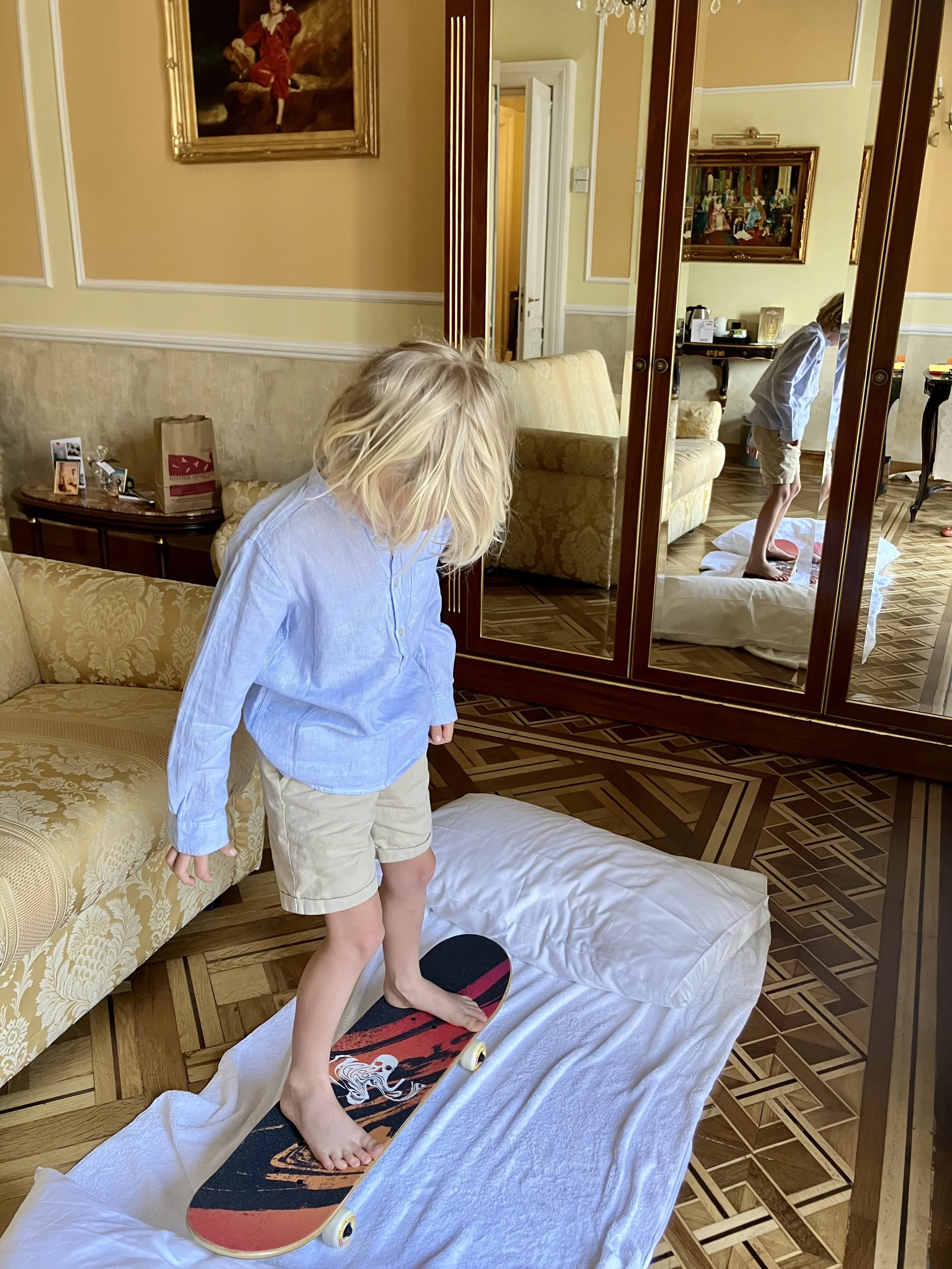
With quite some sense of arrival I hand the keys of my dusty 0.9 Cinquecento to the gracious valet at the Hotel Bristol Palace. Room 641 opens onto a panorama of rooftops, slate and terracotta folding towards the port. But it is the staircase that defines the hotel, a sweeping elliptical form, rising through the building with cinematic Art Nouveau splendour. It is said to have inspired Alfred Hitchcock. You can see it immediately. Vertigo rendered in iron and plaster. Atmosphere, understood through design.
The Holy Grail
In the Cathedral of San Lorenzo, there is a relic, a glass bowl in a mysterious shade of green, long believed to be the Holy Grail. The Sacro Catino. Brought back during the Crusades. Revered, disputed, reinterpreted. Emerald, once thought. Now believed to be glass. It glows regardless.
Genoa understands myth, how objects accumulate meaning, how belief reshapes history. We go looking for it.
Aperitivo: The Lift and the Light
We take the lift, ascending through the city’s layers, emerging above the rooftops. An Aperol Spritz just fifteen driving hours from London, leave at dawn and arrive as the city comes to life. Below us, the colour shifts. Gold, then amber, then something deeper.
Camogli: Edge of Water
In Camogli, on the coastline Italians keep to themselves, everything softens. Pastel façades. Fishing boats. A slower rhythm. Lunch is simple. Pesto lasagne. White wine. Sea air.
At the simple little Hotel La Camogliese, our room is held between two sounds, a waterfall close enough to feel, and the sea outside. We sleep with the windows open.
Return: Water, Light, Discipline
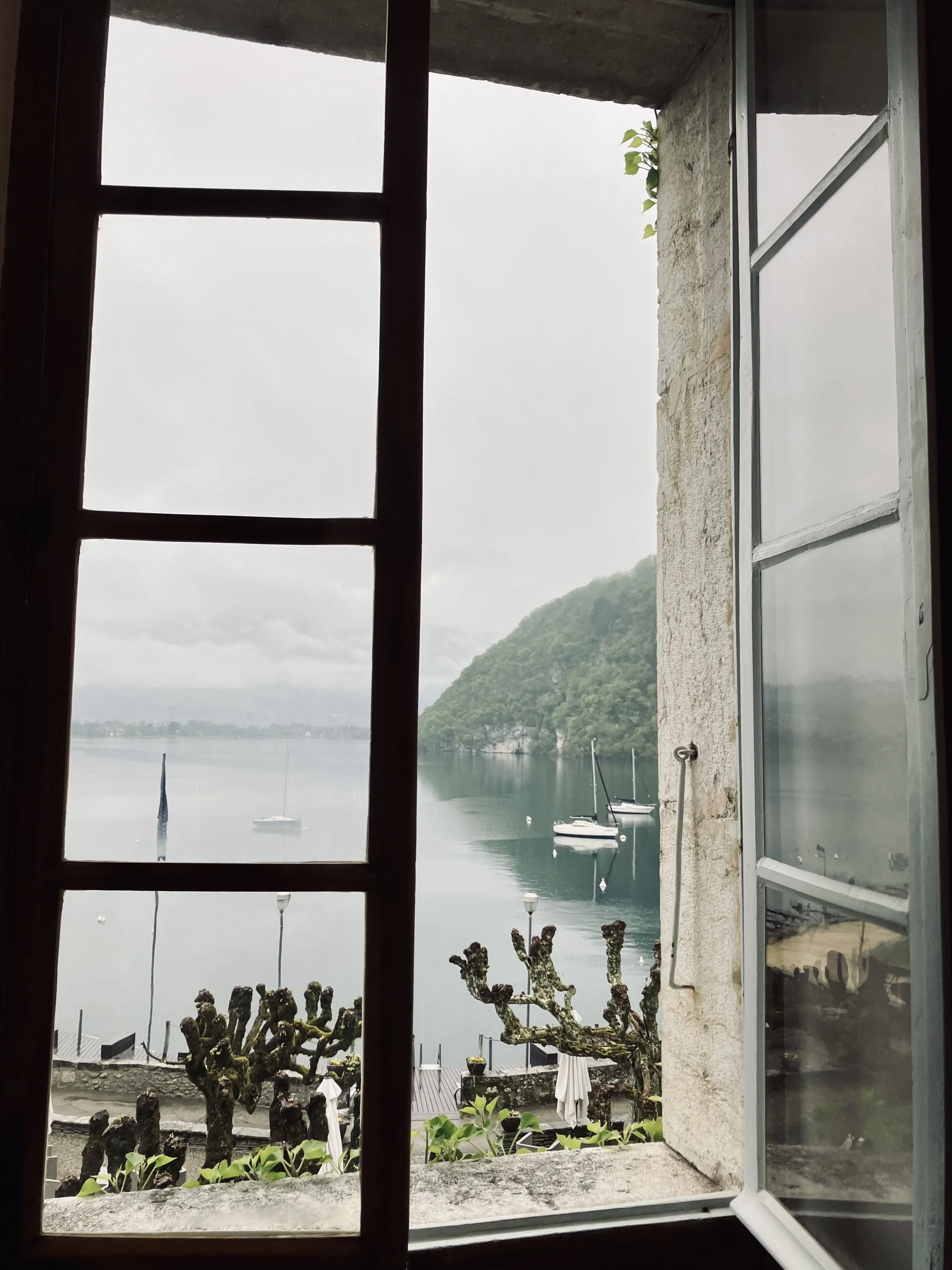
On the return drive Lake Annecy appears first as mist. At Abbaye de Talloires, time slows. A former Benedictine priory, long associated with retreat, with observation and quiet work. Writers, composers, painters have all passed through here, drawn by the clarity of the light.
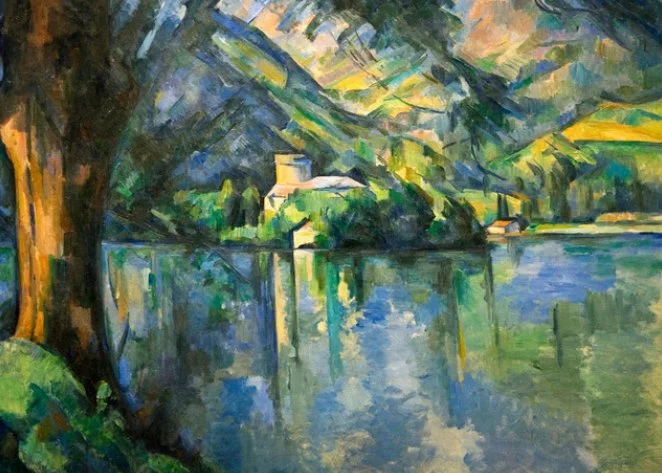
Among them, Paul Cézanne, studying how landscape could be reduced to structure. Mountain, water, sky, planes, colour, permanence. You understand it here. Morning moves slowly across the surface of the lake. Nothing is rushed.
Epilogue: The Small Engine
By the time we return to London, the car feels different. Or perhaps we do. The 0.9 TwinAir, compact, agile and fun, has carried us the length of the journey without excess, without spectacle. In the Audrey Heburn classic ‘Roman Holiday,’ freedom arrives not in scale, but in movement, a princess discovering the city (and herself) on the back of a scooter. The Cinquecento holds the same idea. Not power. Perspective. A smaller frame. A sharper way of seeing. You just have to get in and go.
Viewfinder
Roomkey
Hotel Bristol Palace Old-world grandeur in the heart of Genoa. Book a high-floor room for rooftop views; stay for the extraordinary elliptical staircase, a masterclass in cinematic architecture.
Hotel La Camogliese Simple, intimate, perfectly placed above the Ligurian shore. Rooms framed by water; waterfall to one side, sea to the other.
Abbaye de Talloires A former Benedictine priory on Lake Annecy. Stillness, clarity, and light, a place to retreat, observe, and recalibrate.
Chantilly stay (private hotel or château) for proximity to the training grounds and early morning rides through mist.
Table With A View
Genoa rooftop (via Castelletto lift). Aperol Spritz and pesto Genovese overlooking the port, where the city unfolds in layers of light and history.
Camogli seafront; lasagne, white wine, and salt air at the water’s edge.
Chantilly; local restaurants serving crème Chantilly and seasonal French classics, best after a day at the racecourse or just en route to Paris.
On The Road
Car of choice Fiat 500 0.9 TwinAir Blackjack Edition. Matte black vinyl wrap (a finish usually reserved for far larger cars) over a ‘green’ body; lightweight, nippy and fun. Two-cylinder turbocharged engine delivering just enough power to handle European motorways and minimise fuel. Pre-order a Crit-Air sticker for Paris.
Route London → Eurotunnel → Amiens → Chantilly → Paris → Grenoble → Genoa → Camogli → Annecy → London
Best stretch Grenoble to Genoa; alpine switchbacks, snow lines, and dramatic descent into Liguria. A road that rewards attention.
Windowseat
Rail & road Eurotunnel from Folkestone to Calais; fastest crossing, minimal friction.
Driving time London to Genoa: approx. 11–15 hours (split over two days recommended).
Best timing Early departures and late arrivals; cities at their most cinematic, roads at their quietest.
Pro tip Circle Paris at dawn. The city reveals its structure before it reveals its traffic.
Future Frame: The Considered Journey
Travel light. Smaller cars consume less, ask more of the driver, and engage more fully with the landscape.
Support independent hotels and regional restaurants; places where culture is lived, not staged.
Respect historic environments, from cathedral interiors to alpine roads, as working spaces, not backdrops. Travel, at its best, is not about arrival but the story of getting there.